Yufism: Painting’s Terra Novus
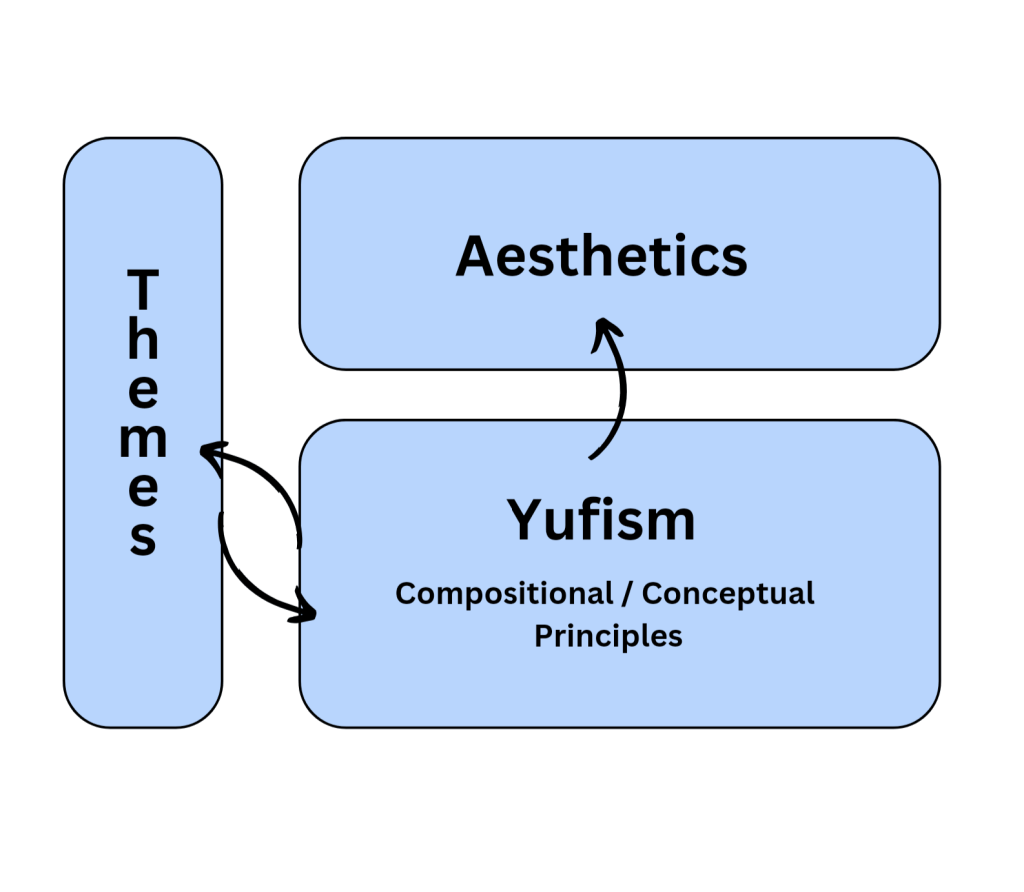
Yufism adds a new conceptual territory to painting.
It is informed by the evolution of visual thinking of 150 years.
It offers radical ideational strategies for composing paintings which could be used by all artists.
Three examples are the incorporation of ‘behaviour’, material light and structured skies.
Yufism is not an aesthetic style, rather it allows for multiple aesthetics to be layered on the underlying blueprint or platform.
Over 80 prototyical artworks have been developed with multiple first ever features.
Offers potential to create hundreds of paintings unlike anything before.
Yufism Intro: Case of Windows
Description of how windows are conceptualized and rendered differently.
Yufism Intro: Cases of Sky, Sun, Foliage, Earth, Flowers, Figures, Faces, etc.
To be added
Yufism: An Outline
Yufism is an ideational platform for a new class of imagery. It introduces compositional principles and constructs underlying aesthetics and subject themes.
Yufist principles include transposition, intermelding, division and subtraction of shape, behaviour and identities among others. For example, a composition may be in parts figurative, still life and landscape; nature may be personalized; and figures may be windowed, exploded and fused.
Examples of unusual conceptual constructs – with isolated, zoomed views follow.
These have the potential to generate many future paintings.
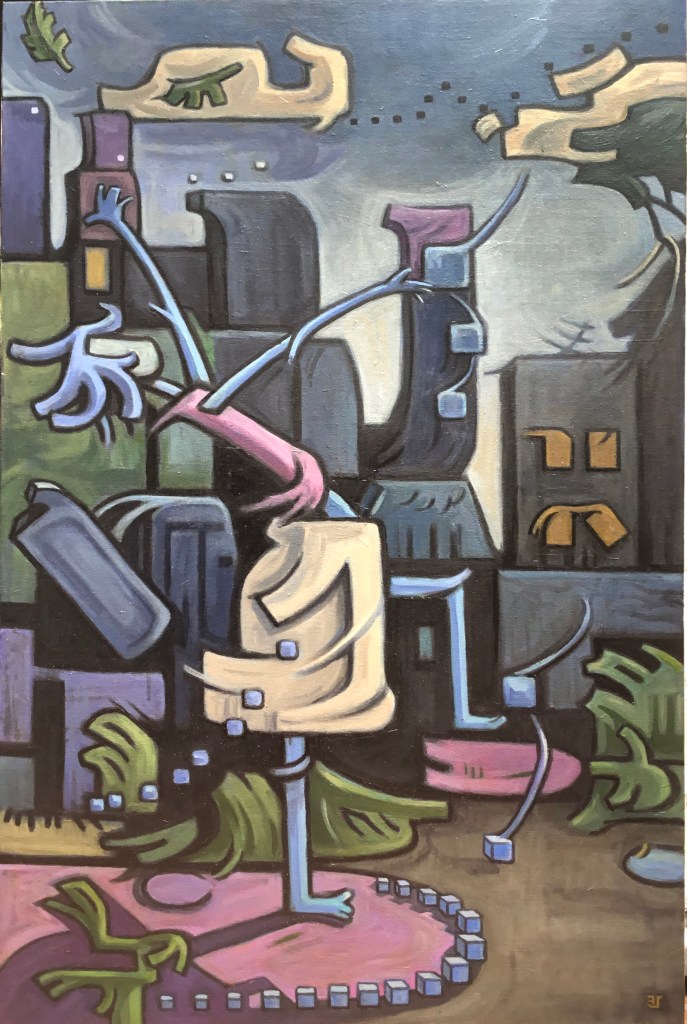
1. Scenic elements in human figuration

Woman wears sea waves and boat as skirt.
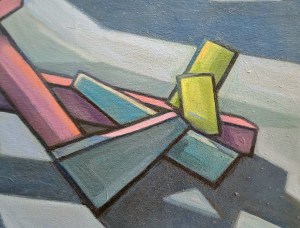
Sailboat shoes

Woman’s face is a hammock with book reader.
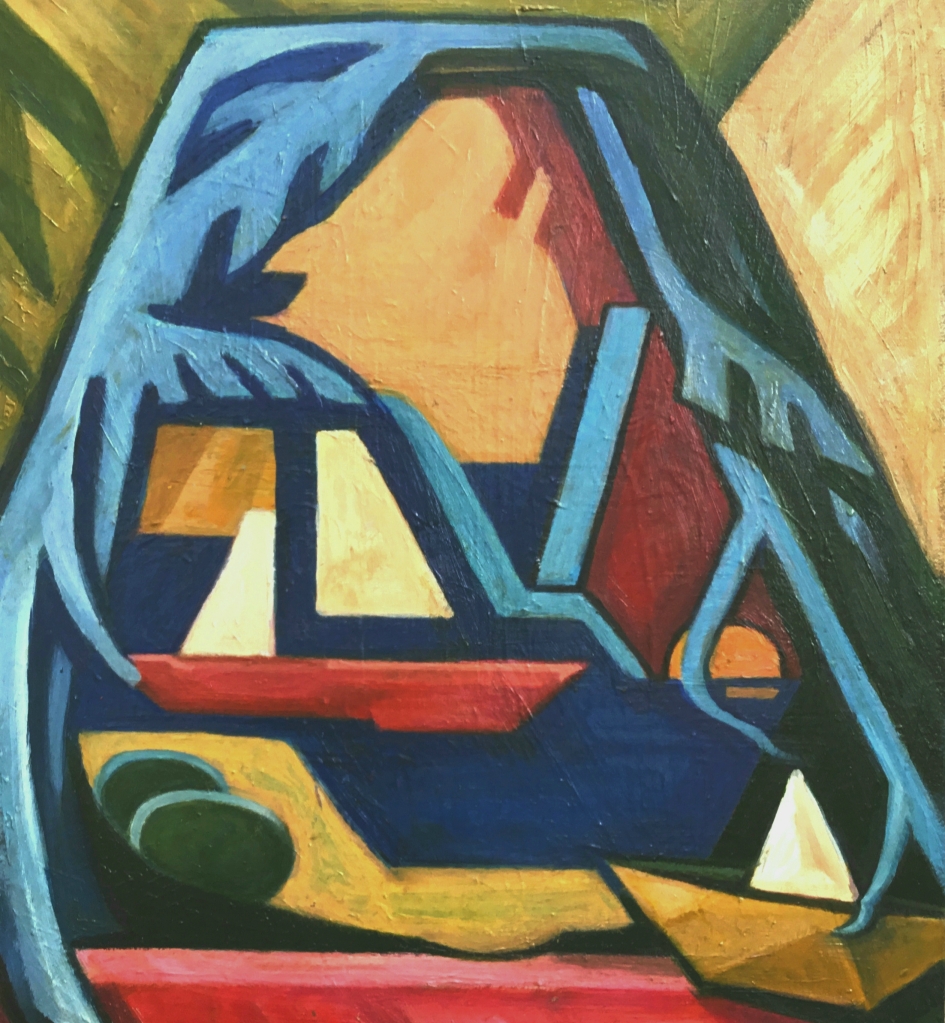
Child’s face has water, sail boats and setting sun
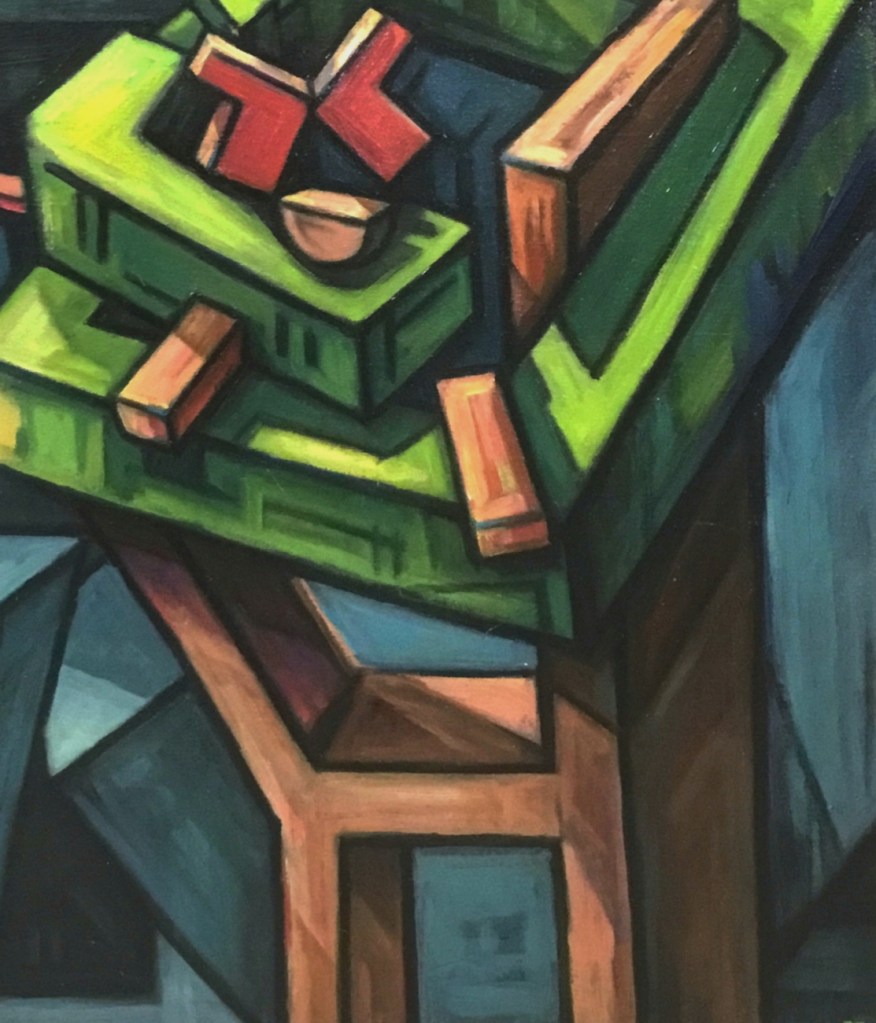
Man’s torso integrates a wooden shelf.
2. Articulation of the invisible
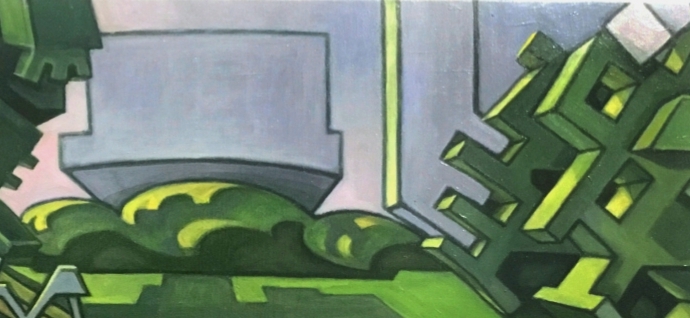
Sky blocks interlocking with trees.
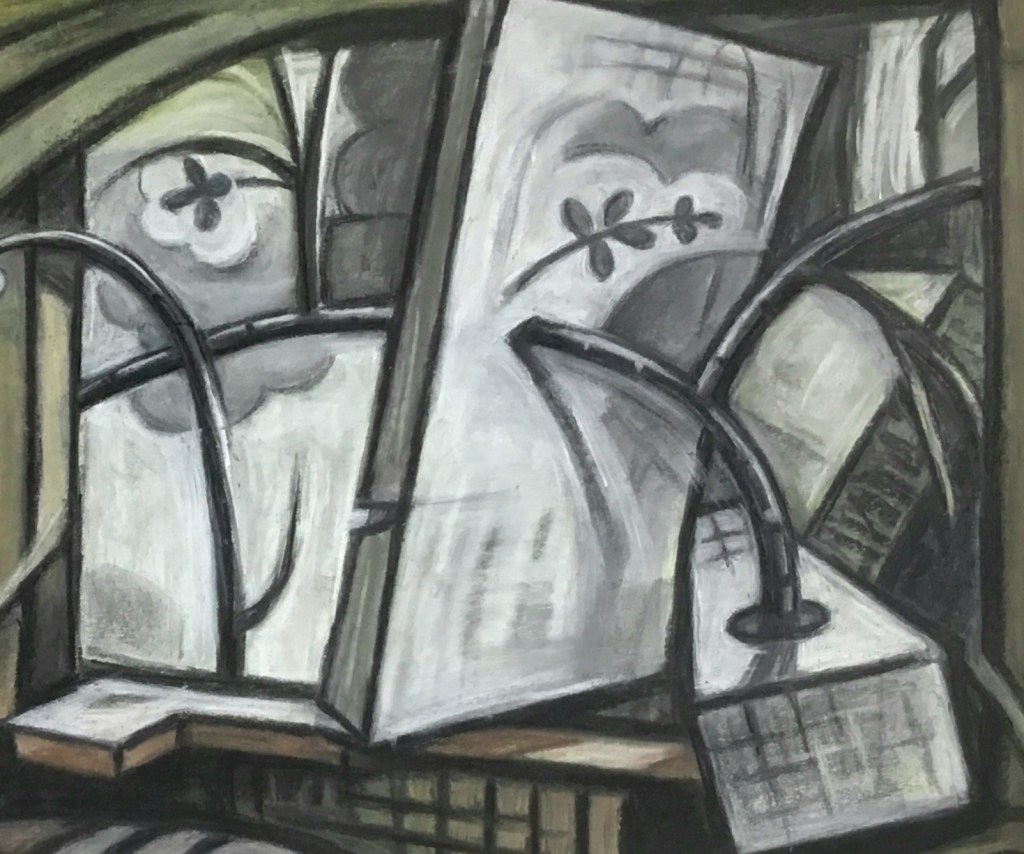
Light blocks penetrated by plants.
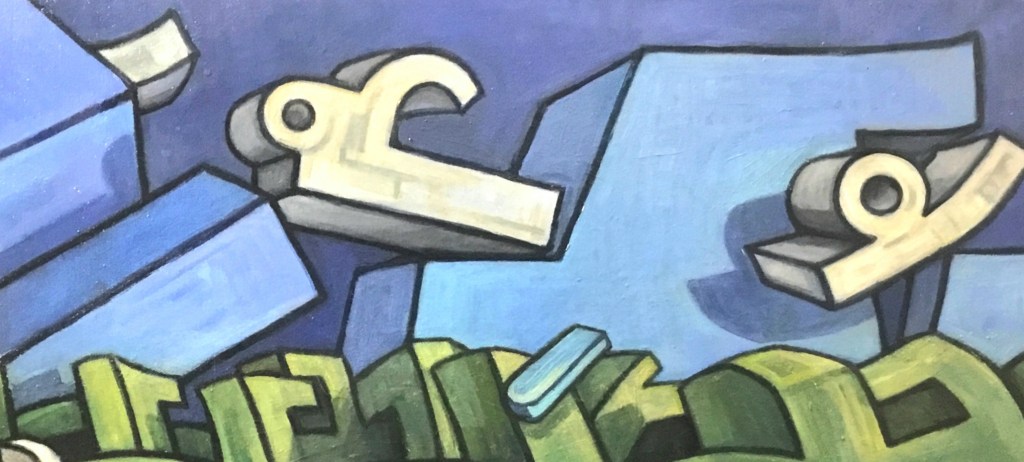
Sky blocks upon which clouds rest.
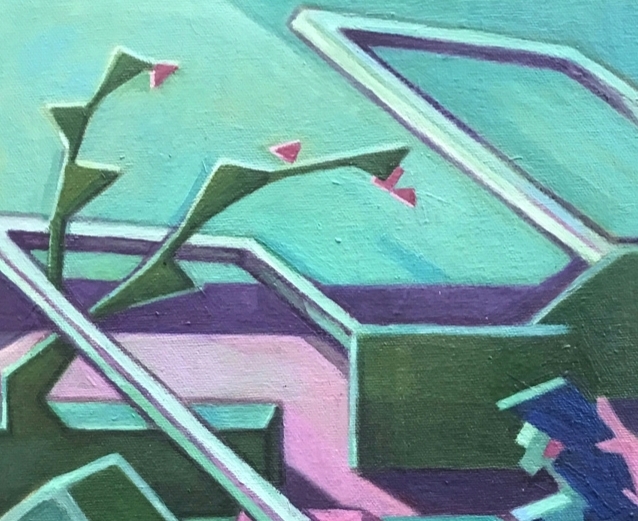
Light rays sculpted.
3. Three dimensional, colored shadows
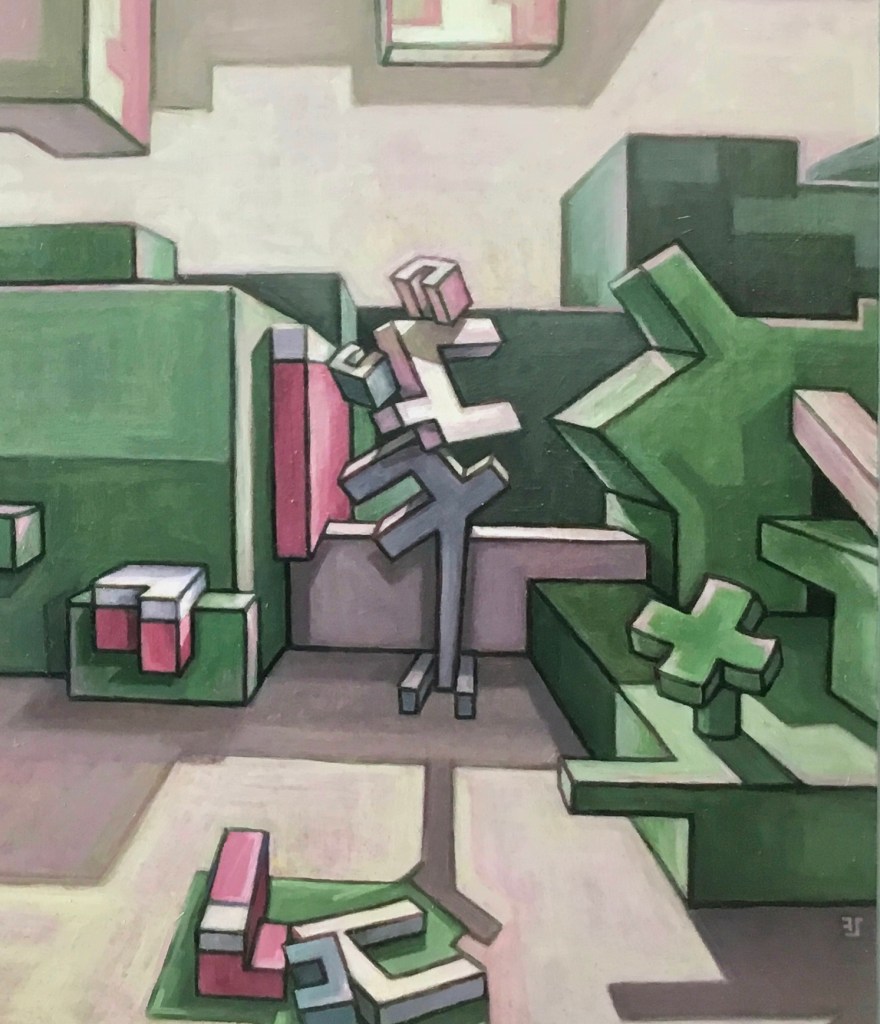
Man casts sculpted shadows on balcony floor.

Shards of darkness descend trees.
4. Exploded elements

Three piece sun that also serves as hair bow.
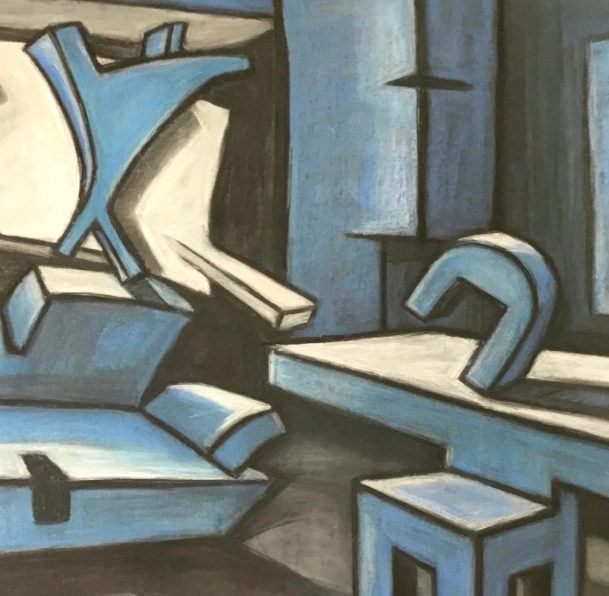
Exploded chair with its backrest on table.
5. Pictorial recursion
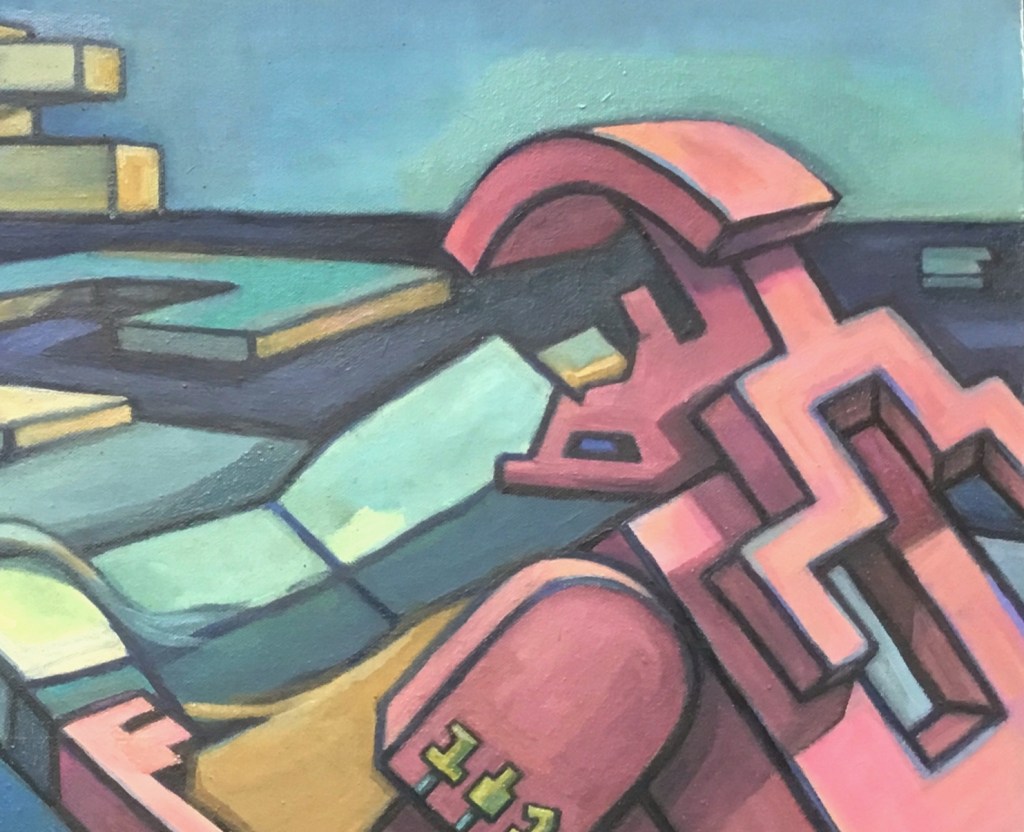
Woman’s face has a magazine reader with a photo of the painting scene itself – twice recursed.
6. Fusion of detached forms via interlinking elements

Couple with fused, windowed form.

Two women have fused legs and arms, center woman and man have joined arms and hair.
7. Imparting movement to stationary objects
Windows leaning or pouring water/light,
curling limbs, walls

Walls blowing like wind.

Flowing, woolly curtains, sofa, chair and walls.

Curling sky, light, walls and sofa.
8. Original primitives, figures

Windowed, positive-negative faces

Windowed face, cognate bust.
9. Indian cultural objects reimagined

Saree wrapping redefined.

10. Negative, windowed, 3d shapes
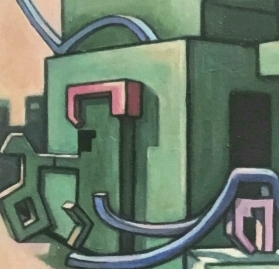
Negative-positive man entering extruded door.
PS: Geometric emphasis of the first series makes way for organic shapes subsequently.


 Is Tarah